The Pause Before You Knew Why
You know the moment. You’re about to say yes to something — a plan, an invitation, a job, a person — and just before the word leaves your mouth, something in your chest tightens, almost imperceptibly. You say yes anyway. Three weeks later, you understand why you shouldn’t have.
Or the opposite. You’re standing in a doorway, keys in hand, and something makes you turn back for a jacket you don’t need yet. You can’t explain it. You just do it. And later that day, the temperature drops without warning.
Neither of these is dramatic. Neither of these involves ancestors, or inheritance, or anything passed down across generations. This is smaller, and it happens far more often: your body arriving at a conclusion before your mind has assembled a single reason for it.
This Isn’t the Same Story as Before
If you’ve been following along here, you’ve read about inherited memory — the body holding what an ancestor couldn’t process, the felt sense of a family pattern arriving before you have language for it. That is real, and it matters.
But this is a different, smaller thing. Not generations old. Not passed down. Just today — your own nervous system, reading a room, a person, a decision, faster than your conscious mind can follow.
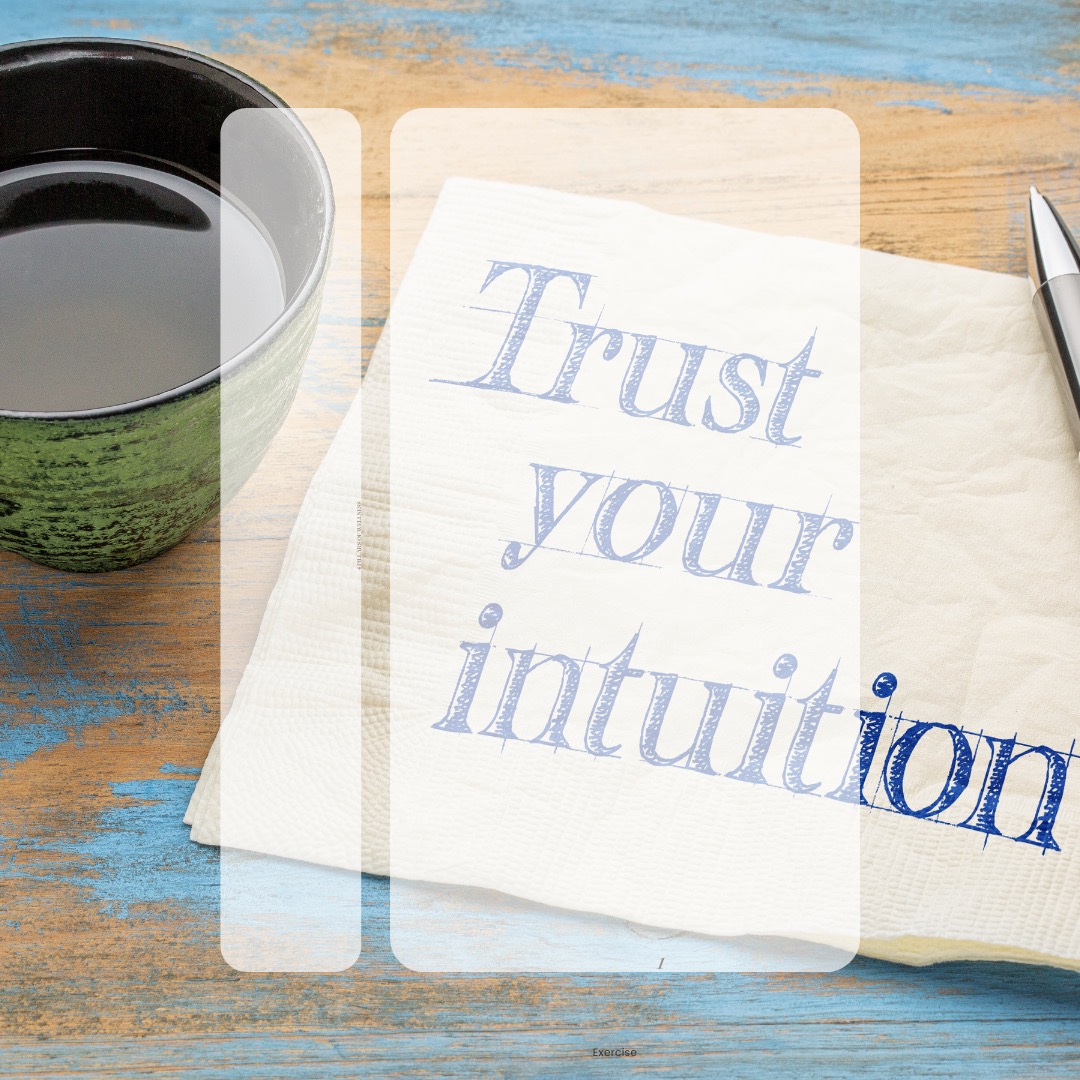
Somatic intuition doesn’t need a long history to be trustworthy. It only needs a body that’s paying attention.

What’s Actually Happening
The body takes in an enormous amount of information that never fully reaches conscious awareness — a shift in someone’s tone, a delay of half a second in how they answer, the almost-nothing tension in a room right before an argument starts. None of this arrives as a thought. It arrives as sensation first: a tightening, a lightness, a bracing you feel before you could say what caused it.
The mind, doing what minds do, tries to catch up — assembling a story, a reason, a justification. Sometimes that story is accurate. Often it arrives minutes, hours, or days after the body already knew.
This is not mysticism. It’s simply the order things actually happen in, most of the time, for most people — whether or not we ever notice it.
Why We Talk Ourselves Out of It
The trouble is, the felt sense rarely arrives with evidence attached. It’s a tightening, not an argument. A pull, not a paragraph. And because we live in a culture that trusts explanations more than sensations, we tend to override the feeling the moment it can’t defend itself out loud.
So we say yes anyway, because we can’t articulate the no. We ignore the pull to turn back, because there’s no reason yet that would hold up if someone asked us to explain it.
Then, later, the reason arrives. And we think: I knew that. Why didn’t I listen?
You did listen. You just didn’t trust what you heard, because it hadn’t finished becoming a sentence yet.
Building the Trust Back
This isn’t about becoming someone who acts on every flicker of sensation without discernment. It’s about closing the gap between when your body knows something and when you’re willing to take that knowing seriously — even before it can explain itself.
That starts small. Not with big decisions. With noticing.
NOTICE THIS WEEK
- A tightening or lightness right before you say yes or no to something small
- The urge to pause, even briefly, before responding to a message or a person
- A physical sense of ‘not yet’ or ‘not this’ with no attached reason
- The moment just before you realize why you feel a certain way about someone or something
You don’t need to act differently because of what you notice. Just notice. Let the sensation exist without immediately requiring it to justify itself. Over time, this is how the trust rebuilds — not through one dramatic proof, but through many small moments of the body being right, quietly, before the mind ever caught up.
The Pause Is the Practice
The next time you feel that small, wordless pause — before a decision, before a yes, before you turn back for the jacket you don’t think you need — try staying in it a moment longer than usual. Not to solve it. Just to notice that it’s there, and that it arrived first.
Your body has been doing this all along, quietly, in the ordinary moments of an ordinary day. It was never only about the past. Sometimes it’s simply about right now.
GET IN TOUCH